In support of rational and compassionate public policy at all levels of government which affect the residents of Newtown Township and Bucks County
“Facts are stubborn things; and whatever may be our wishes, our inclinations, or the dictates of our passion, they cannot alter the state of facts and evidence.” ~ John Adams
What the FAR LEFT has to say about me and my writing
"You are anti-semitic!"
"You are a Zionist!"
"We don't give single fuck what your privileged ignorant ass has to say."
"Think, you pudding headed fuck."
What the FAR RIGHT has to say about me and my writing
"What an arrogant fool you are."
"YOU are pushing that racist bullshit."
"Dmb fk."
"You're a groomer, and are a danger to society."
I encourage you to explore this site and see what the fuss is about. Apologies in advance if you aren't as excited by measured, evidence-based reasoning as my "fans" in social media.
A look at rights, immigration, money and wellbeing through the lens of the oldest fight in American life.
An old meme making the rounds again pairs a 2015 photograph with the words, “If you think fertilized eggs are people but parents who have crossed the oceans with their kids aren’t, stop pretending your concerns are religious.” The photo, taken by Daniel Etter for the New York Times, shows Laith Majid, an Iraqi refugee (originally identified as Syrian), clutching two of his children moments after their overcrowded dinghy reached shore in Greece. It was part of a Pulitzer Prize–winning portfolio.
The meme's renewed circulation has generated the type of responses in the MAGA community one might expect: versions of, “Of course they are people, they just need to immigrate the right way.”
MAGA has made their interest in one type of line—a border on a map—abundantly clear. But the meme got me thinking of a different line separating one group of people from another.
Humans and Persons Under the Law
When I founded my single-member LLC in 2007, I was fascinated to learn that I am considered a “natural person” under the law (a corporation is another type of “person”).
The phrase reminded me that our Founders built a country on the radical premise of natural rights. Merely by existing, they claimed, persons possess certain rights, including the right to pursue happiness (of all things). The promise was a framework within which anyone could lift themselves out of subsistence, without anyone else having to sink. Of course, “anyone” didn’t include everyone. In fact, it didn’t include most someones. By recognizing natural rights only in humans like themselves in gender, race, and property ownership, the Founders, some of them fully aware of the contradiction, exploited an ancient loophole, the same one warriors throughout time have used to justify slaughtering their enemies: humans we don’t like, or want to exploit, aren’t persons. They have no inherent rights, only the rights we choose to give them.
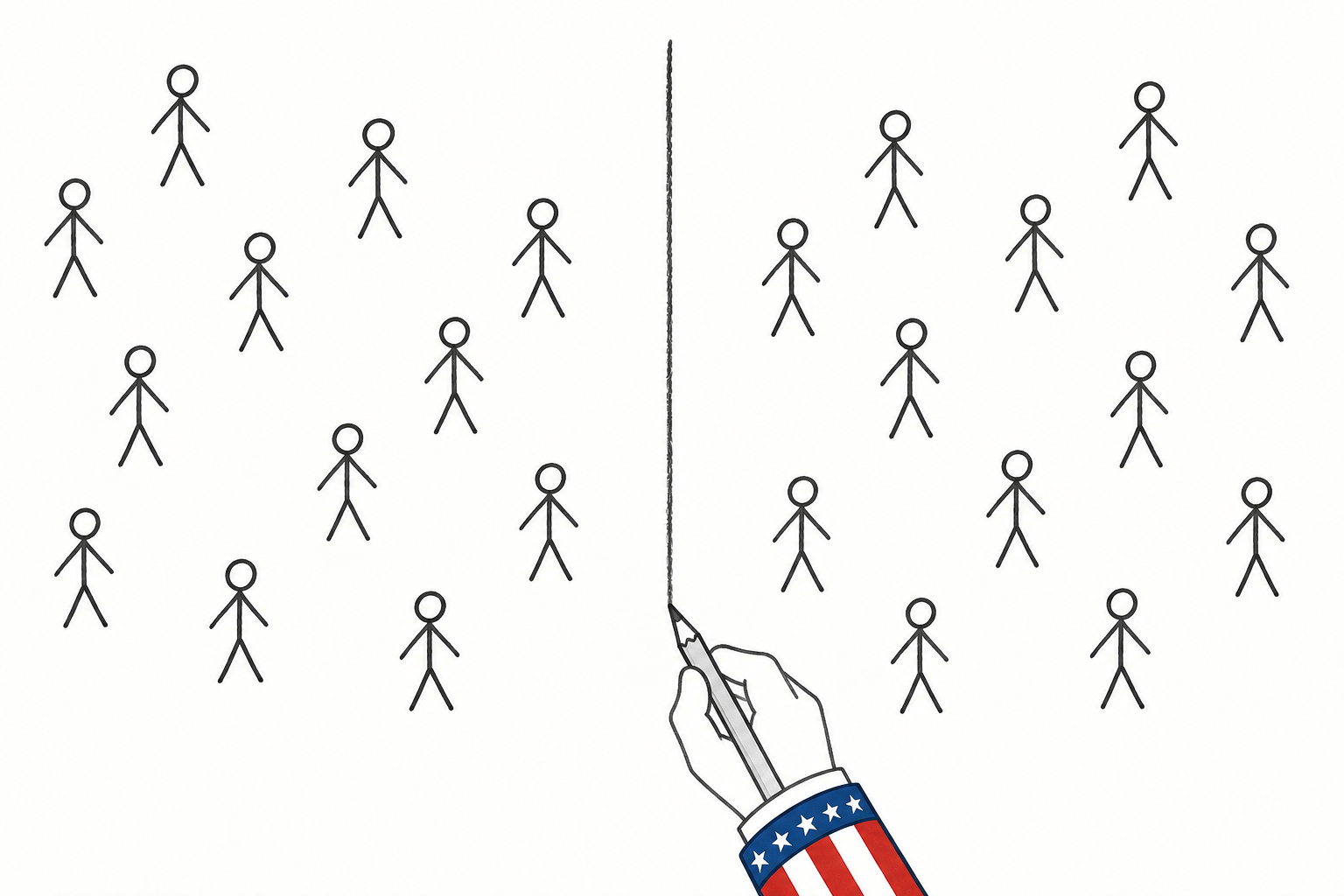
When a nation declares that only some humans have inalienable rights, the genie is out of the bottle. The defining feature of US history has been the drawing and redrawing, by fits and starts, of a line dividing humans who are persons and humans who are not: a line at least as consequential to the freedoms and opportunities experienced by individual humans as the borders between nations.
The Founders, and lawmakers who followed them, drew the line between persons and nonpersons with great care. They had to, because the line would be written into law. In the US, some of the work was crude: women were simply left out, and the Constitution itself excluded “Indians not taxed.” Some have excused these crude exclusions as mere conformity to the conventions of the time, but they were deliberate choices; New Jersey let property-owning women vote for three decades before taking that right back in 1807.
Whenever those in power draw a line between persons and nonpersons, pressures quickly form to push it outward. And when those pressures succeed, inevitably different pressures form to push the line back.
Here’s the irony: by almost any measure, each outward move of the line has left our country, including those already inside the line, better off. Freeing enslaved people, opening voting booths and workplaces to women, ending legal segregation—each put more people to work pursuing happiness, and the sum of happiness grew. But to many who had spent their whole lives inside the line, every expansion felt like a subtraction. Someone else’s gain registered as their loss: of status, of opportunity, of the comfortable sense that the country belonged only to humans like them.
Happiness isn’t zero-sum. It’s not a pie, as they say. In good times, the sum total of it grows, steadily and quietly. In crisis, the total shrinks, and happiness is hard to come by. In those times, fear of getting a smaller share is loud, immediate, and immensely profitable.
Where Borders and the Line Intersect
We live in a Notice Me! world, where even the news is delivered in small chunks designed to generate clicks and likes. In such a world, it’s easy to miss the context provided by thinking about the line separating persons from nonpersons.
MAGA, the prevailing Notice Me! group of the moment, is pushback against an outward-moving line in its most concentrated form: zero-sum fear crafted into a political program. MAGA has been a powerful movement, with Trump as its front man and Project 2025 as its playbook, denials from Trump notwithstanding. MAGA’s aim is to move the line separating persons from nonpersons back, and they are trying to do so in myriad ways. MAGA has gone so far as to question birthright citizenship. In 1857, the Supreme Court declared that Black Americans had “no rights which the White man was bound to respect.” The 14th Amendment moved the line outward in response, and for a century and a half, being born here has been enough. In 2025, President Trump ordered it redrawn. The Court refused, 6–3, with Chief Justice Roberts calling citizenship “the right to have rights.” Trump’s response was to look for another way, and the search continues.
Speaking at the Claremont Institute in 2025, Vice President Vance argued that defining America by the principles of the Declaration of Independence is “way over-inclusive,” and that people whose ancestors fought in the Civil War have “a hell of a lot more claim over America” than others. The Founders said rights come from existing. Vance says they come from ancestry. Virginia counted fractions of blood; the new math counts generations.
Birthright citizenship is the line drawn on a calendar. Immigration enforcement is the line drawn on the street. Under MAGA, ICE has been transformed in ways that seem purpose-built to terrorize immigrant communities. Trump promised to prioritize going after the worst of the worst. Instead, immigration officers have cast a wide net, pushing humans with no criminal record, and even some citizens, outside the line.
Virginia counted fractions of blood; the new math counts generations.
Virginia, at least, wrote its fractions down. Now the line is drawn at the glance of an immigration agent: he’s brown, he’s speaking Spanish, he’s mowing the lawn. That’s the loophole again: humans with their personhood instantly stripped from them by one armed agent backed by the authority of the federal government.
To be sure, immigration policy and enforcement are where cold reality meets the goal of moving the line between persons and nonpersons outward. Brutality and lawlessness in the world at large inhibit how far we can move the line without generating chaos. Amid chaos, the pursuit of happiness is impossible.
I want immigration laws enforced more firmly than they were under Biden, and do not argue for open borders. That’s the position many Democratic candidates are running on this year. But MAGA candidates still defend harsh measures directed at those already in our country with the claim that we are in chaos right now, a notion that does not comport with what most Americans are experiencing.
Highlighting violent crimes committed by undocumented immigrants does not change the statistical fact that immigrants commit crimes at lower rates than native-born citizens. If we were somehow able to deport every undocumented immigrant from our country tomorrow, the crime rate per capita would increase. There is no imperative to deny a path to citizenship for the millions who want to be here and who came at times when we quite intentionally looked the other way.
For decades, those interested in moving the line outward have argued for comprehensive reform of our immigration laws, to include legal status for many currently residing in the US, and legal access for those who wish to fill job openings left vacant by the citizen population. A country can enforce its borders and protect its economy without deciding that millions of its inhabitants are nonpersons, with few or no natural rights. The Constitution promises due process to any “person,” not any citizen, a word choice that keeps the Founders’ premise alive: rights come with existing.
Personhood is not citizenship. A nation may rightly decide who becomes a citizen, and only citizens should choose its leaders. But personhood carries with it more than due process. It includes a fair chance to earn citizenship, a right that ought to belong to everyone already here who has demonstrated a commitment to living as an American, in accordance with our laws and shared values.
Unlawful presence in the US is a civil violation, not a crime. President Reagan acknowledged as much when he signed the 1986 law that granted legal status to nearly three million undocumented immigrants, saying it would improve the lives of people who “now must hide in the shadows,” and adding that “very soon many of these men and women will be able to step into the sunlight and, ultimately, if they choose, they may become Americans.”
Laws live on paper, but enforcement reveals what a society actually intends. Most of us drive above the speed limit at some point every day, and neither we nor the officers who patrol the roads would call us criminals. For decades, employers hired undocumented workers, and the government tolerated their presence and collected their taxes. Someone who has worked here for years, paid taxes using an ITIN, paid their bills, raised a family, and lived among us without incident can reasonably conclude that their country is comfortable with their presence. It should be, and it should offer them a path to citizenship.
The Line in Dollars
So far, then: a nation founded on the radical premise that rights come with existing, and a line, drawn with care, separating persons from nonpersons, separating those whose rights are inherent from those whose rights are granted. A history in which every outward move of that line has resulted in more happiness, while long-time insiders experienced it as a shrinking slice of a fixed pie. And a movement, with a front man and a playbook, built to move the line back.
Of course, rights on paper aren’t the only feature of civilization subject to the drawing of lines. Of all the natural rights, the pursuit of happiness is the one most bound up with money. Economic lines have been drawn and redrawn, also with great care, and the same zero-sum fear has informed the drawing. Here the question is what personhood is worth. Who can own land, sign a contract, borrow money, keep their wages?
For much of the nation’s first century, married women couldn’t hold property in their own names. And even after the property laws changed, it wasn’t until the Equal Credit Opportunity Act of 1974 that banks were barred from denying women credit because of their sex or marital status; until then, many lenders routinely demanded a husband’s signature before a woman could get a loan or a credit card. Social Security, when it began, left out farmworkers and domestic workers, which meant leaving out most Black workers. Federal mortgage maps marked Black neighborhoods—literal lines, drawn in red.
Just like happiness, societal wealth isn’t a pie. Markets grow wealth; public investment widens who can reach it. Each needs the other. Capitalism is a fantastic wealth engine, but we should never mistake it for the whole car. Left alone, markets grow wealth but concentrate it, until most people experience the economy as a scramble for a fixed share. MAGA leadership has accelerated that decades-long trend, landing us in a decidedly unhappy place that has fueled record disapproval ratings for Trump and the rise of democratic socialism. Trouble is, state ownership of the economy, what socialism actually entails, does the opposite: it divides wealth but stifles its growth, and dividing a fixed amount of anything is zero-sum by definition. Taken to its extreme, either system recreates exactly the zero-sum contest the Founders’ framework was meant to escape. Only a blend, with markets as the engine and public investment as an on-ramp and a floor, keeps wealth growing and the line moving outward.
Capitalism is a fantastic wealth engine, but we should never mistake it for the whole car.
Often, conservatives outside the MAGA movement oppose social spending. The conservative objection deserves a fair hearing. We’re guaranteed the right to pursue happiness, the argument goes, not to achieve it, and taxing one group to benefit another takes what someone earned and hands it to someone who didn’t. There’s substance in that: baked-in incentives to spur individual productivity matter, and government programs can fail the people they’re meant to help. But the conservative argument rests too heavily on the assumption that wealth is fixed. Creating on-ramps into the economy, moving the line outward, draws on someone else’s personal wealth in the short term but grows available wealth in the long term. And beneath the respectable version of the conservative argument lies a less respectable one: the poor, merely because they are poor, are suspect. Amid so much freedom and wealth, what must they have done, or failed to do? That’s the line again, this time drawn based on dollars in a savings account.
The Line in and around Human Bodies
Of the rights the Declaration names, life comes first, and for good reason: it’s the precondition of all the others. A person who can’t get care for a treatable illness has the right to pursue happiness the way a person without a boat has the right to cross a river.
The economic case for pushing the line outward with public dollars allocated to healthcare is stronger than most people realize, because we already pay for the uninsured. Since 1986, federal law has required hospital emergency rooms to treat anyone in an emergency, insured or not. We decided, in other words, that no one should be turned away to die at the hospital door, and then chose to pay for that decision in the most expensive way possible: late, in the emergency room, with the costs passed along in everyone else’s taxes and premiums. Meanwhile, tying insurance to employment keeps people in jobs they’d otherwise leave to start businesses or take risks. For a country that prizes the entrepreneur, that’s a strange way to run a market.
I do not mean to dismiss the very real tension between individual rights and the common good. Mandates, taxes, and public health rules do limit individual choices, and people who value liberty are right to watch them closely. But disease doesn’t respect the line. A virus doesn’t check citizenship or bank balances, and an untreated illness in one person becomes a risk, and a cost, to the people around them. The natural-rights tradition never claimed that rights exist in isolation. John Locke, the English philosopher whose ideas on natural rights deeply influenced the Declaration of Independence, wrote that “no one ought to harm another in his life, health, liberty, or possessions.”
Medical freedom, as RFK Jr. practices it, is the freedom of one family to make a choice for the infant too young to be vaccinated, the child undergoing chemotherapy, and everyone else who has no say. Your health is, in part, my health. That’s not the end of individual rights. It’s the condition that makes them meaningful.
Your health is, in part, my health.
Every fight we’ve examined so far has been about where the line falls between people. Abortion is different. Here the line runs through a single body, and both sides claim to be defending someone’s personhood.
Most abortions don’t begin as a contest between two claims. They begin with a pregnancy that came at the wrong time, or a child the family can’t afford, or a job that won’t survive a maternity leave. Women seeking abortions most often cite money and circumstance as reasons, not indifference to the life they’re carrying. Change the circumstances, and the contest often never happens. When Colorado made long-acting contraception free and widely available, the state’s teen birth and abortion rates both fell by roughly half within a few years. Prenatal care, paid leave, affordable childcare, a health system that doesn’t bankrupt new parents: these are all on-ramps, and they make abortion rarer without coercing anyone.
For those who believe abortion is the taking of a human life, rarer is not enough, and I don’t pretend it resolves that moral conviction. But it does offer a test. A movement that sincerely wants fewer abortions has every reason to support the policies that reduce them. A movement that bans abortion while opposing contraception, paid leave, and children’s healthcare is telling us something about which life it actually values.
Yet even a pro-life movement that passes that test can’t escape a deeper problem. It sees itself as moving the line between persons and nonpersons outward, extending personhood to the unborn. In practice, the line is erased and redrawn, with the unborn inside it and pregnant women outside of it. However generous its other policies, a ban hands the state a claim on a woman’s body that it holds over no one else’s.
In Pennsylvania, the uncomfortable compromise has been to protect the unborn from around the time they might survive outside the womb: the state’s Abortion Control Act generally bars abortion after 24 weeks, except to prevent the woman’s death or serious, permanent harm to her health. Under that compromise, the unborn are treated not as persons with natural rights, but as potential persons worth protecting. We may never have a better resolution of this dilemma than the Pennsylvania law as it exists today.
The Line and Identity
For most of American history, gay Americans lived outside the line. Their relationships were crimes in many states until the Supreme Court struck down sodomy laws in 2003; twelve years later, it recognized their right to marry. In a single generation, the line moved from the jail cell to the altar, and the country did not fall apart. Families who had lived in the shadows stepped into the sunlight, to borrow Reagan’s phrase, and the sum of happiness grew.
Now the line is moving back for transgender Americans. The Supreme Court has let the administration bar them from military service, allowed it to require passports to show their sex at birth, and upheld a state ban on gender-affirming medical care for minors, one of many such laws across the country. There are hard questions here, especially about children, and reasonable people disagree about them. But a government that decides which of its citizens’ identities are real is doing what line-drawers have always done: deciding that some humans don’t get to be persons; unless, in this case, they deny what every fiber of their being says they are.
It isn’t hard to see why empathy makes a convenient target. Empathy is how insiders come to recognize outsiders as persons. It’s the force that has moved the line outward, again and again. Discredit it, and moving the line back stops looking like cruelty and starts looking like the defense of national identity. In truth, it’s MAGA preserving itself at the expense of the rest of us.
Those who now call empathy a weakness aren’t asking us to think more clearly. They’re asking us to stop seeing.
The meme described at the top of this essay works because of empathy. We see one father lifting his children toward safety, and for a moment he isn’t a statistic or a policy problem; he’s a person. That’s also why the MAGA response is so revealing: “Of course they are people” concedes the empathy, then withholds what it implies. The history of the line is the history of Americans learning to see themselves in persons they had been taught to see as nonpersons. Those who now call empathy a weakness aren’t asking us to think more clearly. They’re asking us to stop seeing.
Paths to Personhood
We began with a meme that juxtaposed the political and moral debates surrounding fetal personhood with our treatment of migrant and refugee families fleeing danger. Spurred by the concept of personhood, we explored fragments in our news cycle—a birthright ruling here, a detention death there, a lapsed subsidy, a measles outbreak, an abortion ban—each part of the same fight, the oldest one in American life: where to draw the line between humans with natural rights and those without them, and whether moving the line outward costs insiders something they can’t afford to lose.
History answers that question, even if fear never will. Every time the line has moved outward, toward the enslaved, toward women, toward immigrants and their children, toward the sick and the poor, toward gay and transgender Americans, the country has grown richer, stronger, and more itself. Markets grew wealth; public investment widened who could reach it. The zero-sum story has never been true. It has only been loud.
This year we marked two hundred and fifty years since a group of men who owned property, and in many cases owned humans, declared that all men are created equal and endowed with the right to pursue happiness. They didn’t mean everyone. But they wrote it down anyway, in words larger than their intentions, and every generation since has had to decide whether to read those words narrowly or generously. That choice is ours now.
The zero-sum story has never been true. It has only been loud.
The Notice Me! world rewards whoever shouts the loudest about their shrinking share of happiness and wealth. The antidote isn’t to shout back. It’s to notice: where the line is being drawn, who is doing the drawing, and who ends up on the other side of it. Notice the fractions, old and new. Notice when rights start to depend on ancestry, appearance, bank balances, pregnancy, or gender identity. And notice, too, the quieter evidence: that happiness and wealth grow when the line between persons and nonpersons is moved outward, wisely and deliberately. Don't shout; instead, pull every lever of democracy in your reach to move the line outward, where it belongs.
The Founders’ premise was that rights come with existing. They failed to live up to it, and so have we, again and again. But the premise is still the best idea this country has ever had, and the only one big enough to include all of us.
The controversy over the death of a newborn in Lancaster County has revealed the extent to which our politics and our public health are broken.
Check out the full blog:
Fact: Climate change is real. Promoting clean energy is an urgent matter of national security.
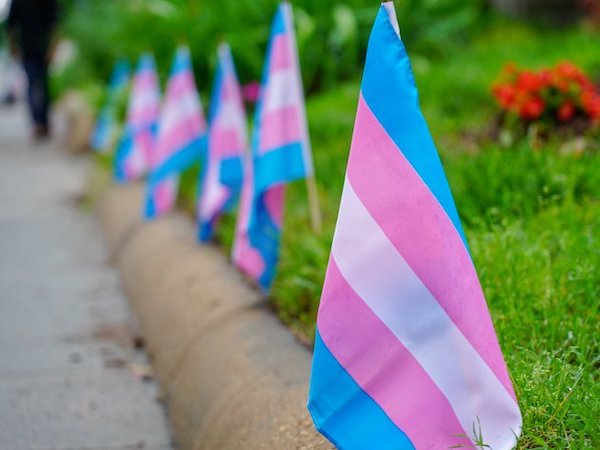
Fact: Transgender persons exist, and cannot be legislated out of existence.
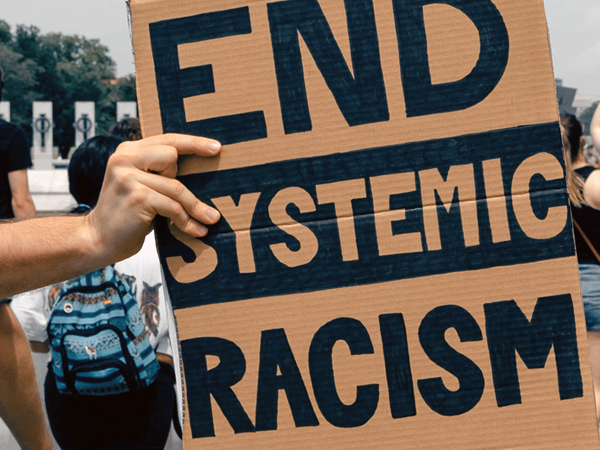
Fact: Students need a factual account of our history, including slavery and its residual effects on the rights and freedoms of all Americans.
Me Imperturbe
Me imperturbe, standing at ease in Nature, Master of all, or mistress of all—aplomb in the midst of irrational things, Imbued as they—passive, receptive, silent as they, Finding my occupation, poverty, notoriety, foibles, crimes, less important than I thought;
Me private, or public, or menial, or solitary—all these subordinate, (I am eternally equal with the best—I am not subordinate;) Me toward the Mexican Sea, or in the Mannahatta, or the Tennessee, or far north, or inland, A river-man, or a man of the woods, or of any farm-life of These States, or of the coast, or the lakes, or Kanada,
Me, wherever my life is lived, O to be self-balanced for contingencies!
O to confront night, storms, hunger, ridicule, accidents, rebuffs, as the trees and animals do.
~ Walt Whitman
Tired
I am so tired of waiting, Aren’t you, For the world to become good And beautiful and kind? Let us take a knife And cut the world in two – And see what worms are eating At the rind.